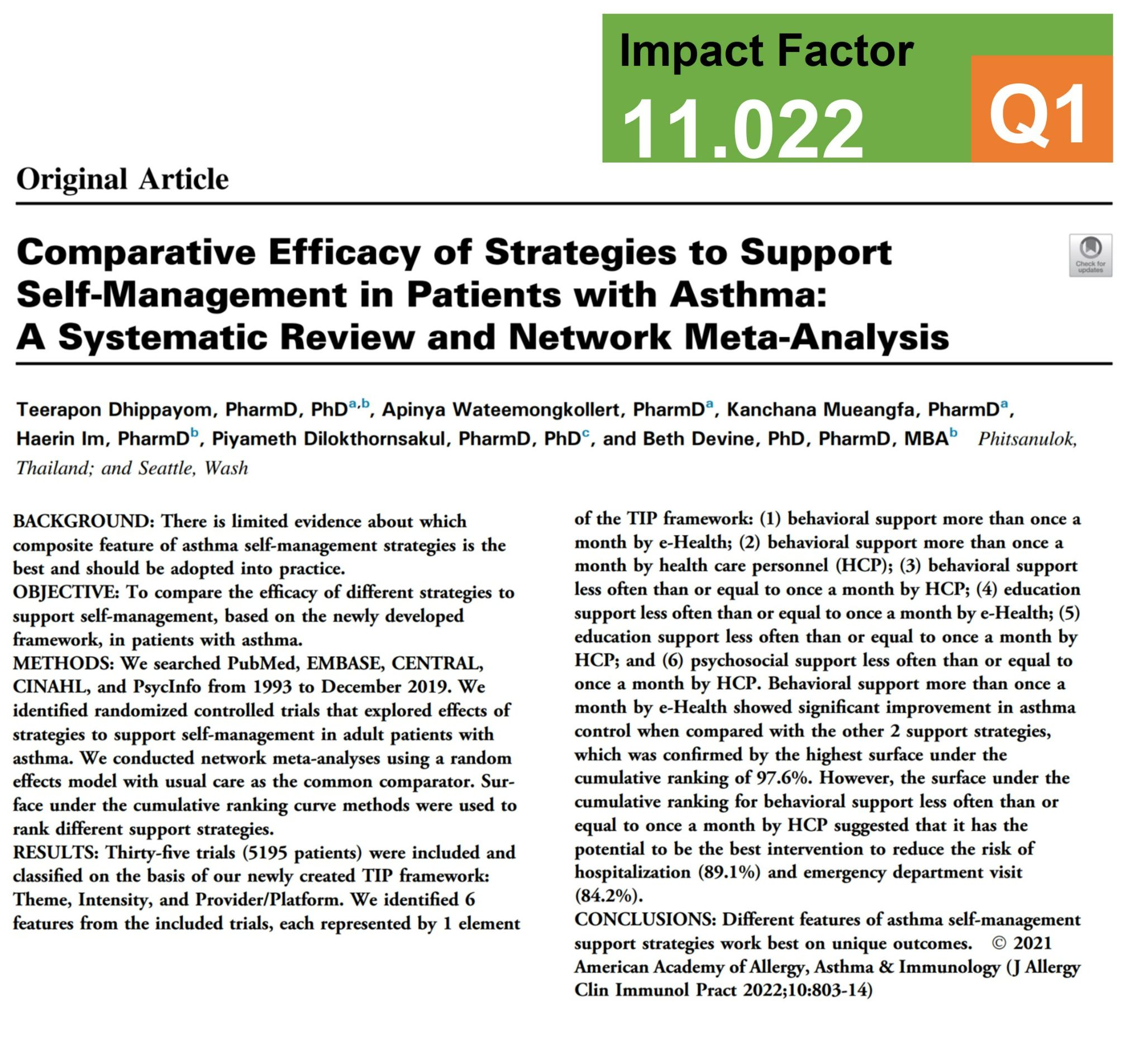
There is limited evidence about which combination of features makes an asthma self-management support strategy most effective in practice. Our study compared the efficacy of different strategies to support self-management in patients with asthma, using our TIP (Theme, Intensity, Provider/Platform) framework together with a network meta-analytic approach.
Thirty-five randomized controlled trials involving 5,195 patients were included and classified into six support-strategy features based on the TIP framework. We found that behavioral support delivered more than once a month via e-Health achieved the greatest improvement in asthma control compared with the other support strategies, confirmed by the highest surface under the cumulative ranking (SUCRA) of 97.6%. Meanwhile, behavioral support delivered no more than once a month by a healthcare practitioner (HCP) showed the greatest potential to reduce the risk of hospitalization (89.1%) and emergency department visits (84.2%).
These findings suggest that different features of asthma self-management support strategies each work best for different outcomes — helping healthcare providers match the right strategy to the right goal, whether that is day-to-day symptom control or reducing acute healthcare utilization.
Published study: Dhippayom T, Wateemongkollert A, Mueangfa K, Im H, Dilokthornsakul P, Devine B. Comparative Efficacy of Strategies to Support Self-Management in Patients with Asthma: A Systematic Review and Network Meta-Analysis. J Allergy Clin Immunol Pract. 2022;10(3):803-814.